Design for Manufacturing: How Engineering Decisions Determine Product Cost
Jun 10, 2026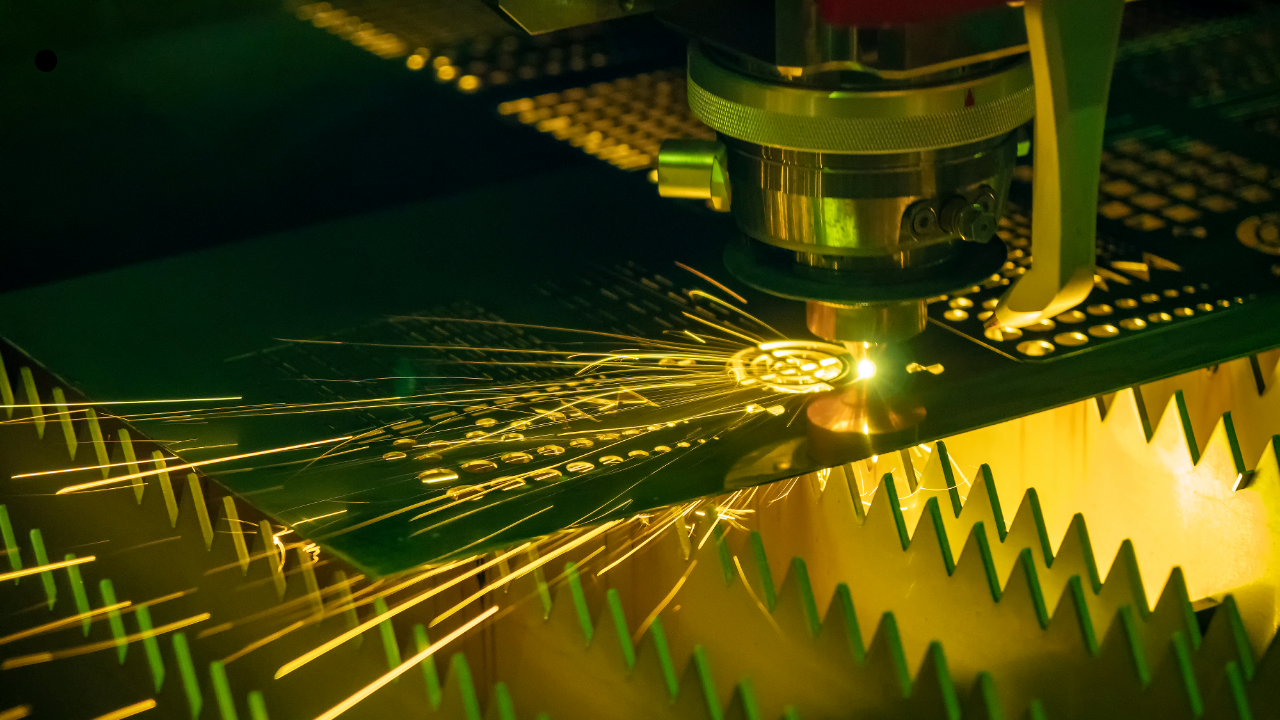
Most products are designed to meet requirements. Not all are designed to be manufactured efficiently.
At first glance, this distinction may not seem important. If a product meets performance targets, satisfies customer requirements, and operates reliably in the field, it would appear that the engineering team has done its job. Yet many organizations discover that a successful design can still create significant challenges once production begins. Manufacturing costs exceed expectations, assembly times are longer than planned, quality issues emerge, and suppliers struggle to consistently produce components to the required specifications.
These problems rarely originate on the factory floor. More often, they are the result of decisions made during product development. The geometry of a part, the materials selected, the tolerances applied, and the methods used to join components together all influence how efficiently a product can be manufactured. Long before the first production part is built, engineering decisions are already shaping product cost.
This relationship between design and manufacturing is the foundation of Design for Manufacturing, commonly referred to as DFM. DFM is the practice of developing products that align engineering decisions with the capabilities and strengths of manufacturing processes. Rather than asking whether a product can be built, DFM asks whether it can be built efficiently, consistently, and economically.
Organizations that embrace DFM often discover that improvements in manufacturability create benefits far beyond the production floor. Products become less expensive to manufacture, quality improves, lead times are reduced, and engineering teams gain a clearer understanding of the trade-offs associated with their decisions. Most importantly, DFM helps prevent costly problems from being designed into a product before production begins.
Manufacturing Begins During Design
Manufacturing is often viewed as a downstream activity. Engineers create the design, release drawings, and manufacturing determines how to build the product. While this sequence accurately describes the order of events, it can create the false impression that manufacturing has no role in the design process.
Every design decision affects the manufacturing process in some way. Material selection influences machining rates, forming operations, and tooling requirements. Tolerance decisions determine process capability requirements. Product architecture affects assembly complexity, inventory levels, and supply chain requirements. Even seemingly minor design choices can have consequences that ripple throughout the organization.
Consider a simple bracket. An engineer may decide to machine the component from aluminum plate because it satisfies all functional requirements. Another engineer may achieve the same performance using a fabricated sheet metal design. Both solutions may work equally well from the customer's perspective, yet the manufacturing costs, production rates, tooling requirements, and supply chain implications may be dramatically different.
The earlier these considerations are evaluated, the greater the opportunity to influence cost. Once a design has been finalized, even small modifications can trigger redesign activities, testing requirements, documentation updates, and project delays. By incorporating manufacturing considerations during development, organizations can avoid many of these downstream challenges.
The Role of DFM During Concept Development
Although DFM is important throughout product development, its role changes as a design matures.
During concept development, engineers are primarily concerned with identifying solutions capable of meeting functional requirements. Concepts are often incomplete, and flexibility is essential. At this stage, excessive focus on manufacturing details can actually limit creativity and prevent teams from fully exploring potential solutions.
For this reason, DFM should serve as a guide rather than a constraint during concept development.
The objective is not to optimize individual features or select specific tooling approaches. Instead, engineers should evaluate whether concepts are compatible with realistic manufacturing processes and identify any obvious obstacles that could prevent successful production. This allows teams to eliminate impractical concepts while preserving the flexibility necessary for innovation.
For example, a particular component may potentially be produced through machining, casting, fabrication, or additive manufacturing. During the concept phase, the goal is not to determine the exact geometry required for each process. The goal is to understand which manufacturing methods are technically feasible and what trade-offs accompany each option.
As development progresses and concepts become more refined, DFM begins playing a larger role. Manufacturing considerations gradually transition from broad guidance to specific design requirements. At that point, engineers can begin leveraging process-specific methods that improve manufacturability while reducing cost.
Selecting the Right Manufacturing Process
One of the most important decisions in product development is selecting the manufacturing process.
Many components can be produced using multiple manufacturing methods. A housing might be machined from billet material, produced as a casting, fabricated from welded components, or manufactured using additive technologies. Each option can potentially satisfy the same functional requirements, but the resulting economics may vary significantly.
Choosing the right process requires evaluating a wide range of factors. Engineers must consider geometry, production volume, tolerance requirements, lead times, tooling investment, scalability, supplier capabilities, and long-term product strategy. The optimal solution is rarely obvious because each process offers distinct advantages and disadvantages.
Consider a large structural component produced in relatively low quantities. Machining may provide excellent precision and require little upfront investment, making it attractive during early production. However, if demand increases substantially, machining costs may become difficult to justify. A casting may require a significant tooling investment but offer substantially lower piece-part costs at higher production volumes. Fabrication may provide flexibility and short lead times but introduce additional assembly labor.
The most effective manufacturing process is not necessarily the process with the lowest piece-part cost. Instead, it is the process that delivers the best overall balance of cost, quality, lead time, flexibility, and production capability.
This evaluation often requires close collaboration between engineering, manufacturing, purchasing, and suppliers. Each group brings a different perspective, and successful process selection depends on understanding how those perspectives interact.
Leveraging Process-Specific Design Methods
Once a manufacturing process has been selected, engineers can begin applying design methods that take advantage of the process's strengths.
These methods are often developed over decades of manufacturing experience. They represent lessons learned through repeated production challenges and provide practical guidance for improving manufacturability. Although the details vary between processes, the underlying objective remains consistent: simplify production while maintaining product performance.
The value of these methods is that they allow engineers to work with manufacturing processes rather than forcing manufacturing processes to overcome design decisions.
Several examples illustrate how relatively small design changes can create significant improvements in manufacturability.
Slot and Tab Construction in Sheet Metal Assemblies
Sheet metal fabrication provides an excellent example of DFM in practice.
One widely used technique involves incorporating interlocking tabs and slots into mating components. These features allow parts to locate themselves during assembly and significantly reduce the need for manual positioning.
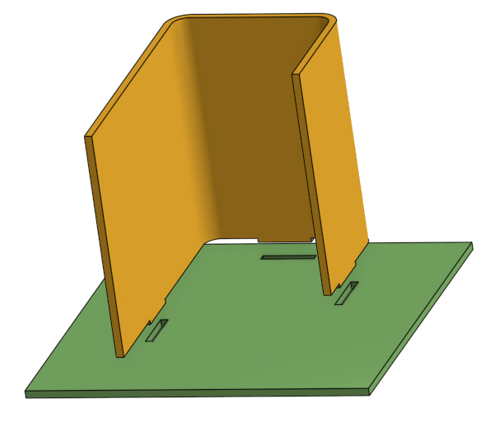
Figure 1: Sheet Metal Component with Slot and Tab Construction
The effectiveness of this approach comes from the accuracy of modern laser cutting equipment. Because tabs and slots are created during the cutting operation, they require little additional manufacturing effort while providing substantial downstream benefits. Components can often be assembled more quickly and with greater consistency because the geometry itself establishes the desired position.
Without these features, operators may need fixtures, measuring tools, or manual adjustments to achieve proper alignment. Each additional step adds labor, introduces variation, and increases the opportunity for mistakes. Slot and tab construction reduces these dependencies and creates a more repeatable assembly process.
The benefits become even more apparent when manufacturing variation occurs.
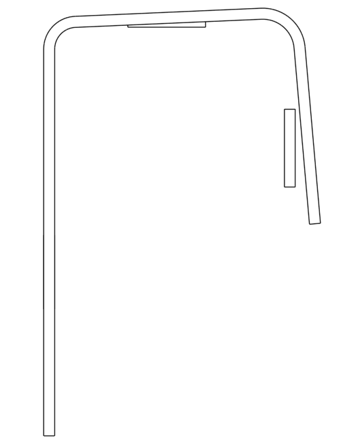
Figure 2: Assembly of Parts with Inaccuracies from Bending
Sheet metal bends are rarely perfect. Material properties vary, tooling wears over time, and small deviations are inevitable. In many situations, slot and tab construction helps compensate for these inaccuracies by forcing components into their intended locations during assembly. The design itself becomes a mechanism for maintaining dimensional accuracy.
This illustrates an important DFM principle. Effective designs do not simply tolerate manufacturing variation. They actively help manage it.
Designing for Additive Manufacturing
Additive manufacturing has expanded the range of options available to engineers, but it has also introduced new design considerations.
Unlike traditional manufacturing methods that remove material, additive manufacturing usually builds components layer by layer. This difference fundamentally changes how engineers must think about manufacturability.
One of the most important considerations is part orientation within the machine.
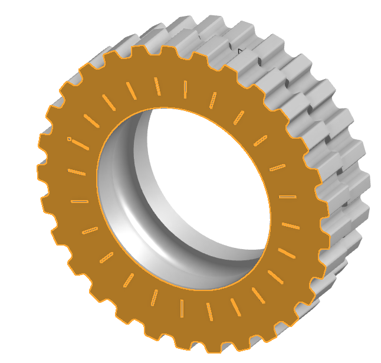
Figure 3: Orientation of a Gear Within a 3D Printer (Horizontal surface highlighted)
The orientation selected for printing influences dimensional accuracy, surface finish, mechanical properties, support structure requirements, build duration, and post-processing effort. A component that performs exceptionally well in one orientation may perform poorly in another.
Consider a gear that must transmit torque while maintaining accurate tooth geometry. The direction of layer deposition affects both strength and dimensional performance. If the gear is oriented improperly, critical surfaces may require additional finishing operations, while load-bearing features may not achieve the desired mechanical properties.
Engineers familiar with additive manufacturing understand that successful designs require more than creating a printable model. They require an understanding of how the manufacturing process creates the part and where the process performs best.
As additive manufacturing continues to mature, these considerations are becoming increasingly important. What was once primarily a prototyping technology is now being used for production applications across multiple industries, making DFM principles more valuable than ever.
Machining Features with Manufacturing in Mind
Machining remains one of the most versatile manufacturing processes available, but even highly flexible processes benefit from thoughtful design decisions.
A common example involves the choice between chamfers and fillets.
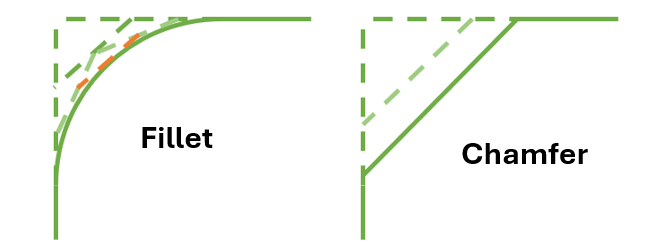
Figure 4: Cutting Passes of Chamfers vs. Fillet Features
From a purely functional perspective, either feature may satisfy a design requirement. From a manufacturing perspective, however, the cost implications can be very different. Chamfers can often be produced with a single cutting pass, while fillets frequently require additional tool movements to generate the curved profile. Every additional movement increases cycle time, and cycle time directly affects manufacturing cost.
This does not mean fillets should be avoided. In many applications, fillets are essential for reducing stress concentrations and improving fatigue performance. The key is understanding where a fillet provides meaningful value and where a simpler feature can achieve the same objective.
DFM encourages engineers to make these decisions deliberately. Rather than applying features by habit, designers evaluate how those features influence manufacturing effort and whether the added cost is justified.
DFM Beyond the Factory Floor
Although DFM is often associated with manufacturing operations, its influence extends throughout the organization.
Engineering decisions affect inventory, purchasing, quality, logistics, and supply chain management. As a result, manufacturability should be viewed as a business issue rather than strictly a manufacturing issue.
One of the most effective ways to reduce complexity is through standardization. When multiple products share common components, organizations benefit from reduced inventory levels, simplified purchasing activities, improved material availability, and lower administrative overhead. These advantages may appear small individually, but they accumulate over time and can significantly reduce operating costs.
The same principle applies to raw materials. Many organizations gradually accumulate a wide variety of material grades, thicknesses, and sizes because individual projects are optimized independently. While each decision may appear reasonable in isolation, the resulting complexity creates inventory costs and supply chain challenges that often go unnoticed.
Strategic standardization helps organizations capture efficiencies that extend far beyond the manufacturing floor.
Quality is another area heavily influenced by DFM. Designs that are difficult to manufacture or assemble create opportunities for defects, rework, and scrap. Conversely, designs that simplify production often improve quality naturally.
This philosophy is reflected in the concept of Poka Yoke, a term popularized by Toyota that refers to error-proofing. The objective is to design products and processes in a way that makes mistakes difficult or impossible to make. Features that eliminate assembly ambiguity, prevent incorrect orientation, or guide operators toward the correct action can dramatically reduce quality problems while lowering production costs.
DFM Is a Continuous Process
One of the most overlooked aspects of Design for Manufacturing is that it is never finished.
Manufacturing technologies continue to evolve. New materials become available, automation capabilities improve, software becomes more sophisticated, and production methods that were once impractical become economically viable. Assumptions that were valid ten years ago may no longer be accurate today.
For this reason, effective DFM requires continuous learning and regular collaboration between engineering, manufacturing, suppliers, and operations teams. Organizations that maintain this connection are better positioned to identify emerging opportunities and adapt their designs accordingly.
The most successful companies view DFM as an ongoing capability rather than a one-time exercise.
Conclusion
Design for Manufacturing is ultimately about recognizing that engineering decisions and manufacturing outcomes are inseparable. Every material choice, tolerance specification, geometric feature, and assembly method influences how efficiently a product can be produced.
The organizations that consistently deliver competitive products understand this relationship. They evaluate manufacturing considerations early, select processes deliberately, apply proven design methods, and continuously adapt as technology evolves. In doing so, they create products that are not only functional and reliable but also practical and economical to manufacture.
Product cost is determined long before production begins. DFM helps ensure those decisions work in favor of the business rather than against it.